Benefits of Homeschooling: Introduction
Education is the
cornerstone of your child’s formative years, and there are myriad advantages to schooling your children at home.
If you choose to homeschool your child,
taking full responsibility for his or her education, instead of enrolling them in a formal school environment, you should ensure that your child enjoys all of the
benefits of learning at home.
Home-schooling
requires you to be the teacher. As a parent, you must possess the
patience and hard work needed to properly educate your child.
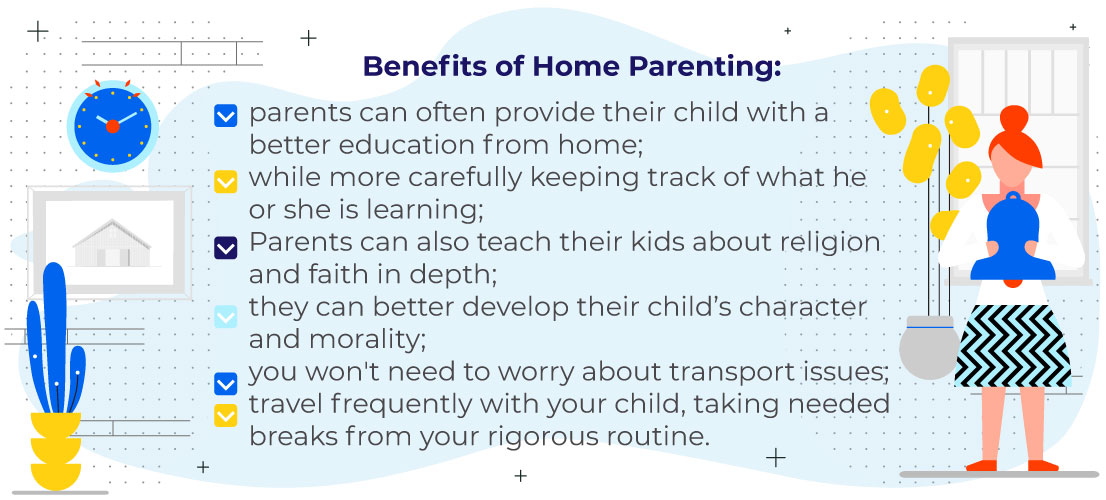
With advances in digital learning and the increased availability of online test resources, home-schooling is more effective than ever. Often, parents can often provide their child with a better education from home, while more
carefully keeping track of what he or she is learning.
[subscribe=20543]
Parents can also teach their kids about
religion and faith in depth when they are studying from home. Many parents also think they can better develop their child’s
character and morality when through homeschooling.
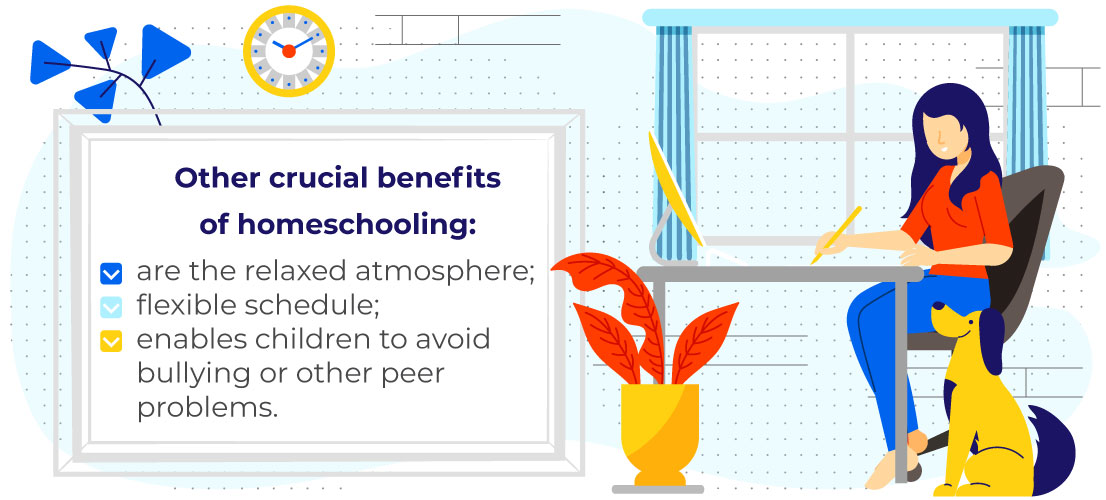
Other crucial benefits of homeschooling are the
relaxed atmosphere and
flexible schedules, both of which tailor to the child's needs.
Home-schooling also enables children to
avoid bullying or other peer problems, as well as any behavior problems common in formal schools. As a parent, you
won't need to worry about transport issues and can instead
travel frequently with your child, taking needed breaks from your rigorous routine.
Rich Rewards: Implicit Benefits of Homeschooling
While the
reasons for home-school are clear, it’s imperative to discuss its
benefits. Homeschooling can reap rich rewards for parents and children.
According to the Academic Statistics,
homeschooled students on average outperform their peers on standardized tests.
If your child is a homeschool graduate, he or she is more likely to be
active and involved in civic affairs and communities. Additionally,
he or she tends to be happier when compared to the graduates of formal schools.
In competitive examinations, home-schooled students perform better than traditionally educated students!
Benefits of Homeschooling for Your Child
The Right Amount of Academic Flexibility
[workbook=12185][workbook=13849]
Homeschooling can help children who are
specially gifted and creative since it enables them to
stay active and strong-willed.
Different Pace and Approach
As a homeschooling parent, you will oversee your child’s schedule, grade level, learning approach, and curriculum. Such
flexibility helps create a
positive environment for your child’s learning.
Meet Current Needs Now
By teaching from home, you can
prioritize the needs of your child, including their mental, emotional, behavioral, and physical health and wellbeing. Your child can also spend some
quality time with the family, the best foundation for the development of social skills and values.
Dedicated Teachers with a Great Student-Teacher Ratio
A low student-teacher ration is a very good reason why home-schooling is often more effective. Homeschoolers often teach using a
one-to-one basis, therefore the
number of teachers per student is much higher than at formal schools.
Often, homeschool teachers are also
more dedicated. As parents, you love your children and have devoted your lives to helping them mature into adults.
More Emotional Freedom as a Benefit of Homeschooling
If you educate your child at home, you also
remove a lot of pressure and stress he or she might endure in the normal classroom. At home, there is also no need for your child to change himself to conform with a group or give in to
peer pressure. Homeschooled teenagers also have
better self-esteem, increased happiness, and greater emotional maturation as adults.
No Homework
Since your kids are directly involved in the learning process, they complete
less homework. As parents,
you won't have to struggle with their children to finish lengthy worksheets or difficult practice tests.
Flexible Schedules
The
benefits of home-schooling are perhaps most clear for parents who need to rush out of the house in the morning to deal with
all sorts of schedules, meetings, and commitments.
As a parent,
you get to decide on the length of lessons and the timing of holidays. Many home-schooled children can enjoy
educational breaks with their parents at different times during the year when there are
opportunities to visit museums and parks. Students can also more easily go on
field trips and vacations that tie in perfectly with what they are learning at home.
The Relaxed Pace of Learning
Homeschooling helps children
avoid confusion while learning, as they receive one-on-one tutoring. Homeschoolers practice autonomy and are therefore
less emotionally and intellectually dependent on others as public-school students.
If your child has
special needs, he or she is often
labeled inadequately by the school system. Homeschooling, contrastingly, ensures
your child is always the priority, so their requirements are never forgotten.
Physical Health Benefits of Homeschooling
By learning at home, your child is able to
stay more active and play outside, spending extra time on activities like
dance and sports. They are also able to
connect with nature while learning academics,
gaining confidence over time through practice.
You can also guarantee your child
gets enough sleep and wakes up naturally by
planning sleep schedules around activities. Adjusting to your teen’s changing body clock is easier when you have control over his or her day.
Managing Illnesses and Special Life Circumstances
One of the foremost benefits of
homeschooling is that you can
help your child recover smoothly from illness. Since they are not returning to a formal school, they
avoid the busy work and stress.
If you are in the
military,
changing schools frequently may have a negative effect on your child. It makes sense to homeschool your child so that no matter how much you move around,
location will not impact your child’s studying patterns.
Benefits of Homeschooling: Conclusion
Homeschooled children spend a lot of time interacting with their parents. These intimate connections
foster close-knit relationships between parents, children, siblings, and students.
Homeschooled children
learn to work with adults as they start to
think independently from a young age.
Homeschooled kids don’t live under the social and schedule pressure of an institution, so they
naturally become independent. They evaluate their life based on their own
morals and logic rather than is what expected by a peer group.
This
independence is something that helps children become
mature into adulthood. It also allows them to learn more in less time than those educated in institutional schools.