
Transitions can be overwhelming, especially for young children. Creating a kindergarten readiness checklist will make a big difference in preparations.
Parents sending their children off to their first year out of preschool find themselves asking a lot of questions. What should a child know before kindergarten?
What is kindergarten screening? Is there anything my child needs to know before kindergarten screening?
Is my child ready for kindergarten, and how can I help them prepare?

 Take care of bodily needs independently
It is vital that your child can use the bathroom and get dressed, without any help or guidance. These skills are some of the most important that your child can have.
While they don’t seem like they have a direct impact on kindergarten readiness skills, they absolutely do.
Their education and social health will be slowed and hurt if these skills are not instituted by the time they reach kindergarten.
After all, they will not be at home for hours. They must be able to manage these things on their own.
Take care of bodily needs independently
It is vital that your child can use the bathroom and get dressed, without any help or guidance. These skills are some of the most important that your child can have.
While they don’t seem like they have a direct impact on kindergarten readiness skills, they absolutely do.
Their education and social health will be slowed and hurt if these skills are not instituted by the time they reach kindergarten.
After all, they will not be at home for hours. They must be able to manage these things on their own.
 What is a kindergarten screening?
Kindergarten screening, also called kindergarten assessment, is a school-held assessment that determines the level of certain skills of students entering kindergarten.
Each screening varies from school to school. The skills in the above kindergarten readiness checklist are included somewhat, but other skills are usually focused on.
Teachers will assess your child for fine and gross motor skills, their language abilities, and self-care skills.
Check-in with the school to see what will be evaluated. Then, use this info to create a kindergarten assessment checklist to refer to.
For example, when the school evaluates fine motor skills, they might ask your child to draw a line. Ensure they get sufficient practice with each of the skills.
Visiting the school and getting familiar with it is easy if you attend a kindergarten assessment.
Checklist-making will help keep you and your child on track for the assessment.
Keep in mind that there are generally no right or wrong answers with these assessments. They are simply ways for educators to gather information on the students.
It helps them shape the curriculum and head in the right developmental direction for each student.
If you’re looking for more ways to mark off items on your kindergarten readiness checklist, consider Argo Prep's award-winning K-8 Math & ELA Program.
Our educational program is up to Common Core standards and is designed to be as interactive and engaging as possible.
What is a kindergarten screening?
Kindergarten screening, also called kindergarten assessment, is a school-held assessment that determines the level of certain skills of students entering kindergarten.
Each screening varies from school to school. The skills in the above kindergarten readiness checklist are included somewhat, but other skills are usually focused on.
Teachers will assess your child for fine and gross motor skills, their language abilities, and self-care skills.
Check-in with the school to see what will be evaluated. Then, use this info to create a kindergarten assessment checklist to refer to.
For example, when the school evaluates fine motor skills, they might ask your child to draw a line. Ensure they get sufficient practice with each of the skills.
Visiting the school and getting familiar with it is easy if you attend a kindergarten assessment.
Checklist-making will help keep you and your child on track for the assessment.
Keep in mind that there are generally no right or wrong answers with these assessments. They are simply ways for educators to gather information on the students.
It helps them shape the curriculum and head in the right developmental direction for each student.
If you’re looking for more ways to mark off items on your kindergarten readiness checklist, consider Argo Prep's award-winning K-8 Math & ELA Program.
Our educational program is up to Common Core standards and is designed to be as interactive and engaging as possible.
What does my child need to know before kindergarten?
Kindergarten Readiness Basics
Before your child enters the year, there are several kindergarten readiness skills they must possess. They will have developed some of these skills during their time in preschool. However, sharpening those skills at home is vital to their future success. Luckily, incorporating practice of these concepts is neither difficult nor complicated. What kids need to know before kindergarten may vary from student to student. However, this list contains a general overview of skills every child should master. [workbook=16007][workbook=14179][workbook=12183] ...Kindergarten Readiness Checklist
Counting whole numbers up to 20
Don’t worry about fractions or decimals at this stage. Your child should be able to count from one to 20. They should also be able to count up from a given number up to 20. They have a clear understanding of the order and relationship of numbers. For example, they should know that 15 is more than 11, and vice versa. Practicing counting is easy. Use physical groups of objects, such as buttons, coins, or beans. Count everyday objects you encounter together. You can play a game with dice. Roll the dice and ask them to identify the number on each. Then have them state which is larger, which is smaller, or if they are equal. There are lots of other hands-on ways to learn math, which are proven to be more effective for many students.
State, read, and write their name correctly
Teaching your child to read and write their name is vital for obvious reasons. It’s also a great way to introduce them to writing. It also helps them differentiate between capital and lowercase letters and learn the role each plays. Write their name for them in clear, large letters. Ask them to identify each letter and help them sound out each of them. Ask them to replicate each letter underneath your written example. If your child grows bored with this activity, try mixing things up. There are plenty of engaging, creative ways to practice this. Use alternative writing tools or even household objects such as pipe cleaners. [subscribe=20543]Identify and trace basic shapes
These include square, rectangle, circle, triangle, rhombus, and heart. Ask your child to identify the shapes of objects you have around the house. Alternatively, you can draw some and ask them to name each one. This gives them the introduction to basic geometry that they will need to draw from later on.Recognize some sight words
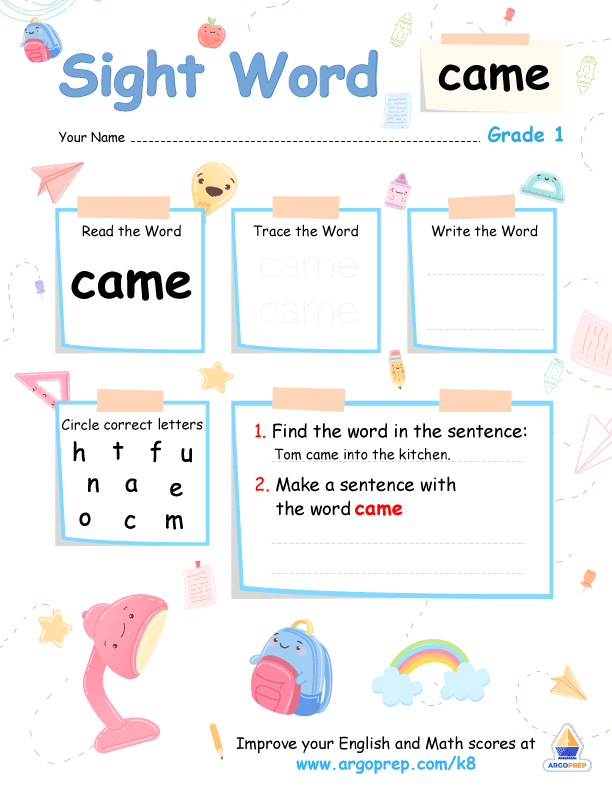
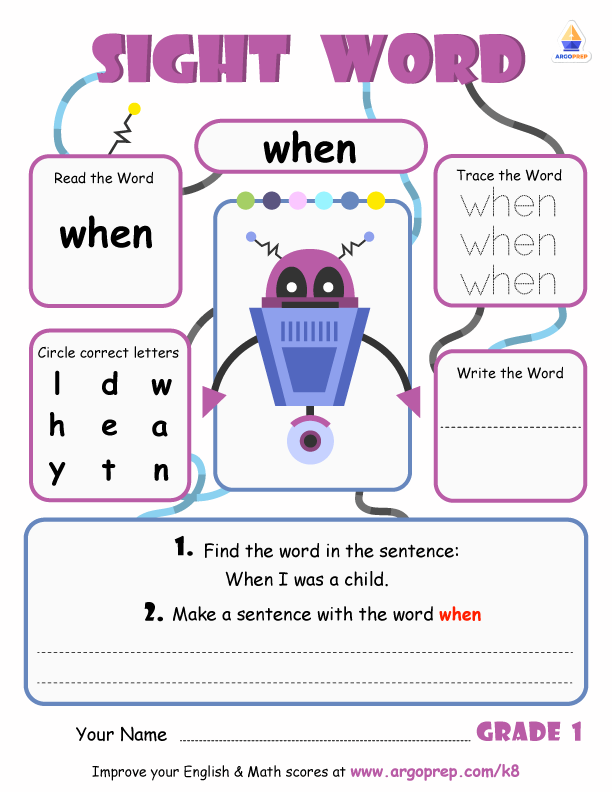
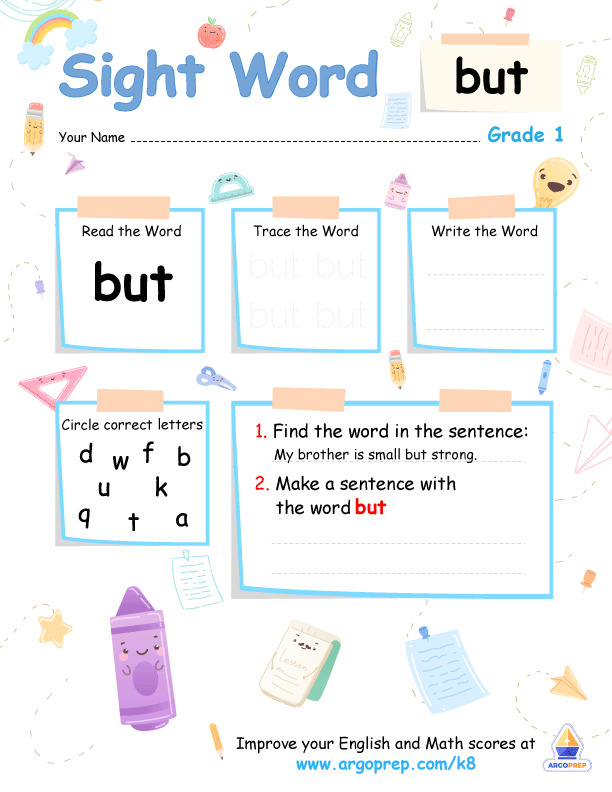
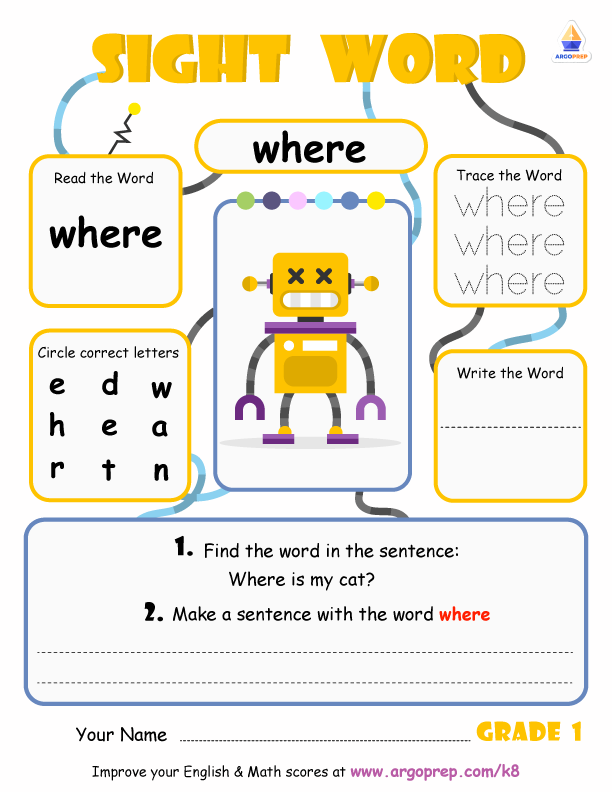
Sight words are words that your child should be able to recognize immediately. Some of these words include “stop,” “no,” and “yes.” Knowing a few sight words will help them learn more as they develop reading skills.Identify colors
This is perhaps one of the simplest items on our kindergarten readiness checklist. It’s likely your child is already familiar with the basic colors. If not, it’s never too late to master them. Your child should be able to pick out individual colors and name each of them. These include red, orange, yellow, green, blue, purple, brown, black, and white. They should also be able to sort objects by their color. Ask them about the colors of objects around your home or while you’re out. The grocery store is a great place for color quizzing!Take care of bodily needs independently
It is vital that your child can use the bathroom and get dressed, without any help or guidance. These skills are some of the most important that your child can have.
While they don’t seem like they have a direct impact on kindergarten readiness skills, they absolutely do.
Their education and social health will be slowed and hurt if these skills are not instituted by the time they reach kindergarten.
After all, they will not be at home for hours. They must be able to manage these things on their own.
Visit the school and a kindergarten readiness checklist
Your child might be uncomfortable with leaving home for so long. Getting to see the school and meet their teacher before things get started will help them feel more secure. See what over-the-summer events your child’s school is holding. Go on a tour of the school as soon as possible. This will help your child become comfortable with the new territory before school starts, rather than being surrounded by unfamiliarity and new faces.Ensure completion of immunizations and paperwork ahead of time
It’s never too early to get requirements out of the way. Waiting until the last minute can result in a stressful start to the year. A kindergarten readiness checklist isn’t just about what your child needs to know. It is also about your responsibilities as a parent. Check with the school and your state to make sure everything is up to date and to standards. See if they have their own kindergarten checklist for paperwork and immunization requirements, or do some research and make one yourself. Keep in mind that this kindergarten skills checklist is for example only and that the needs of every child differ.What is a kindergarten screening?
Kindergarten screening, also called kindergarten assessment, is a school-held assessment that determines the level of certain skills of students entering kindergarten.
Each screening varies from school to school. The skills in the above kindergarten readiness checklist are included somewhat, but other skills are usually focused on.
Teachers will assess your child for fine and gross motor skills, their language abilities, and self-care skills.
Check-in with the school to see what will be evaluated. Then, use this info to create a kindergarten assessment checklist to refer to.
For example, when the school evaluates fine motor skills, they might ask your child to draw a line. Ensure they get sufficient practice with each of the skills.
Visiting the school and getting familiar with it is easy if you attend a kindergarten assessment.
Checklist-making will help keep you and your child on track for the assessment.
Keep in mind that there are generally no right or wrong answers with these assessments. They are simply ways for educators to gather information on the students.
It helps them shape the curriculum and head in the right developmental direction for each student.
If you’re looking for more ways to mark off items on your kindergarten readiness checklist, consider Argo Prep's award-winning K-8 Math & ELA Program.
Our educational program is up to Common Core standards and is designed to be as interactive and engaging as possible.