
So you want to learn about idioms? You have finally bit the bullet and Googled it. Plus, your teacher assigned you a homework assignment on idioms, so you figured you'd kill two birds with one stone and learn what they actually are.
Well, I'm here to let the cat out of the bag and teach you everything you need to know about this figure of speech.
It is estimated that there are over 25,000 idioms in the English language (and that doesn't include slang, regional dialect, and "shop talk" from various professions). In short, idioms are an unavoidable part of the English language.
Let's not beat around the bush and dig into idioms!
What is an Idiom
An idiom is a group of works that creates an expression that doesn't match the intended meaning. In common terms, this means that it's a sentence that says one thing but means another.
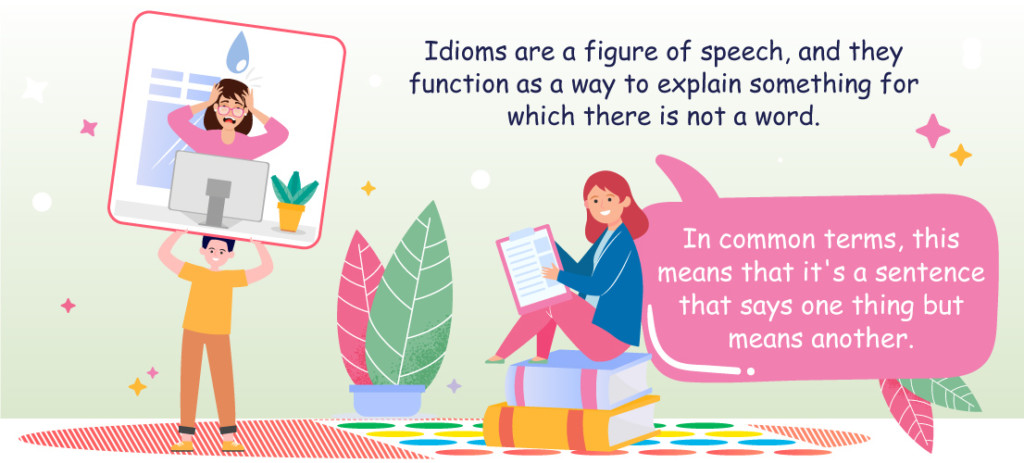
Idioms are a figure of speech, and they function as a way to explain something for which there is not a word.
For example, don't let the cat out of the bag, doesn't literally mean you're holding a cat in a bag. Most native English speakers know that this is a phrase we say when we're revealing a secret.
Idioms are commonly used in written and spoken English, and so many people don't even think twice when they hear something as odd as, by the skin of your teeth.
Non-English Speakers
Idioms can be challenging for English language learners. Since they are tackling the literal translation of words, idioms can stump non-English speakers, because they don't understand the intended meaning.
[workbook=13510][workbook=12189][workbook=13584]...
For many, idioms are something they have heard their entire lives. A person might not even realize how weird being caught between a rock and a hard place is on it's surface because they instinctively know that it means they are making a challenging decision.
Every language has its own set of unique idioms. For a lesson in how non-English speakers feel hearing English idioms, check out this list of idioms from other languages!
Where Did Idioms Originate?
Idioms are a way to peek into culture's values and norms. For instance, in American culture, idioms are usually derived from sports, military (famous battles, for example), and religion.
When you trace back the history of many idioms, you will find that they originated in the Bible, from famous athletes, and even gaining independence from England.
As noted, all cultures have and use idioms, so it can be a key to understanding culture more clearly.
Even if you aren't interested in digging into a country's history through idiom usage, learning idioms will increase fluency in different languages.
Commonly Used Idioms
A blessing in disguise
Meaning: A good thing that initially seemed bad
Adding insult to injury
Meaning: To make a bad situation even worse
Beating a dead horse
Meaning: Giving time or energy to something that is ended or over
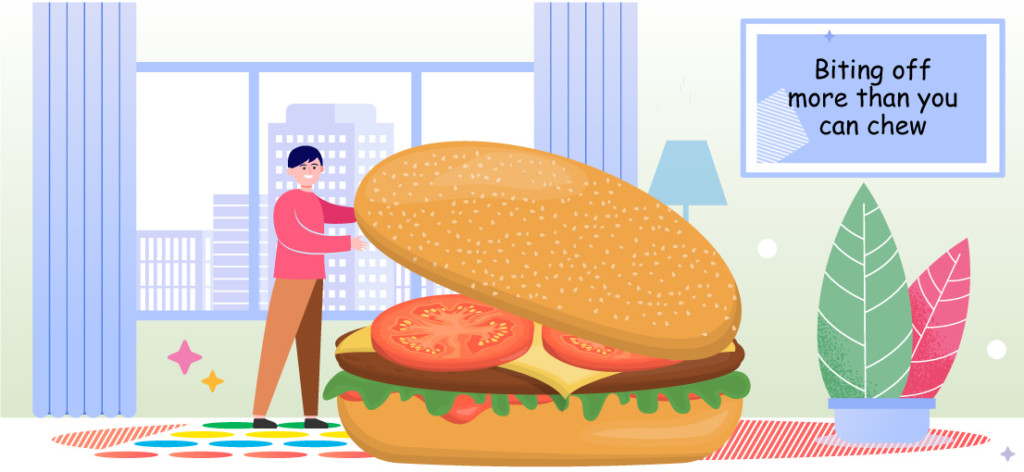
Biting off more than you can chew
Meaning: Not having the capacity to take on a new assignment or task that is just too taxing
Doing something at the drop of a hat
Meaning: Doing something at the moment of being asked
Don't count your chickens before they hatch
Meaning: Not to count on something happening until after it's already happened
Cutting corners
Meaning: Not performing a task or duty correctly to save time or money
Devil's advocate
Meaning: To take the side of the counter-argument, or offer an alternative point of view
Fit as a fiddle
Meaning: Being in good health
Getting a taste of your own medicine
Meaning: Being treated the way that you have been treating others
Getting a second wind
Meaning: Having energy again after being tired
Giving someone the cold shoulder
Meaning: Ignoring someone
Going on a wild goose chase
Meaning: Doing something pointless
Hitting the nail on the head
Meaning: Performing a task with exactness
Killing two birds with one stone
Meaning: Accomplishing two different tasks in the same undertaking
Letting the cat out of the bag
Meaning: Sharing information that was intended to be a secret
No pain, no gain
Meaning: You have to work hard to see results
On the ball
Meaning: Doing a good job, being prompt, or being responsible
Pulling someone's leg
Meaning: Joking with someone
Straight from the horse's mouth
Meaning: Reading or hearing something from the source
The last straw
Meaning: The final difficulty or annoyance that makes the entire situation unbearable
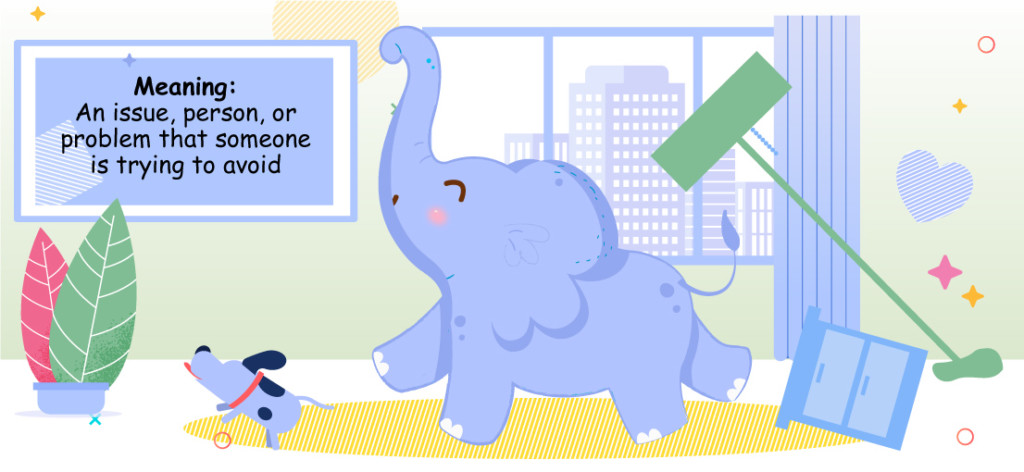
The elephant in the room
Meaning: An issue, person, or problem that someone is trying to avoid
Your guess is as good as mine
Meaning: To not know something
One Note About Academia
While idioms provide interest in writing, many academic courses frown upon the use of them in academic writing.
Since idioms are considered jargon (or slang), it can make your essays appear unprofessional.
Pay special attention to your idiom usage in your writing. So many idioms are engrained in your mind that you might not even realize you're using them!
Why Do We Need to Know This?
Idioms are essential because they offer us a way to communicate feelings for which there is no word for in the English language.
For instance, being in the doghouse, we know, is a phrase for being in trouble with a wife. But there is no other word that articulates that feeling as clearly as the idiom.
Idioms are a type of figurative language that allows us to pinpoint an exact feeling, thought, or idea. They fill the gaps in the English language.
Idioms Help Bond People Together
Idioms also build communities. They tend to be informal, social, and help people bond together. This is especially true as it applies to regional idioms.

Think about being from the south and moving to Minnesota for college. You might feel out of place and have a hard time understanding some of the things that the people around you were talking about.
Paired with new climate, faces, and experiences, dialect and speech would also be a cue that you're not at home anymore. Then, one day you go to a party and meet somebody from the south as well.
There you two can reminisce about sayings from your grandparents. Many of these sayings are idioms like, Grinnin' like a possum eatin' a sweet tater, are unique to the south.
Conclusion
Idioms are a fun and engaging way to add interest to writing (and speech). On the surface, they might seem confusing, since they don't match the intended meaning.
[subscribe=15875]
Many people use idioms to create a community and define culture, but idioms are also used as a way to fill gaps in vocabulary when a word can't do the trick.
If you are still having trouble grasping the concept of idioms, simply think of them as a seasoning to a meal. Just like my favorite seasoning (garlic) adds more interest to my bread, idioms add more flavor and interest to your writing.

Curious to know more about idioms (and many other figures of speech)? ArgoPrep's blog is filled to the brim with relevant tips, tricks, and topics to help you reach your educational goals!