
What is Present Perfect Tense?
The English language is made up of various verb tenses, which include the Present Perfect Tense. The Present Perfect demonstrates an action that has taken place once (or many times) before now.
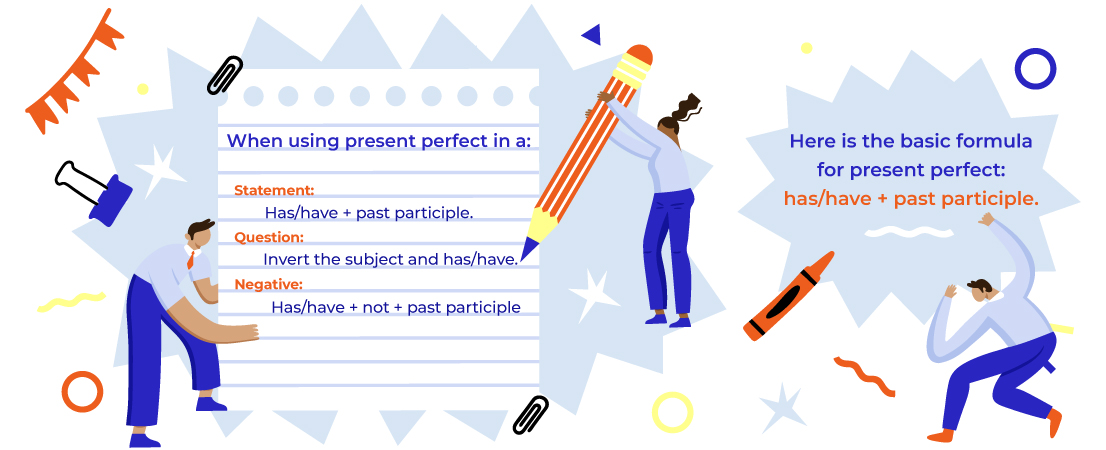
Here is the basic formula for present perfect: has/have + past participle.
When using present perfect in a:
- Statement: has/have + past participle.
- Question: Invert the subject and has/have.
- Negative: Has/have + not + past participle
For many, this tense confuses them enough that they choose not to use it at all - instead electing to use the past tense. However, there is a risk in doing this.
I didn't finish my homework.
In this example, we are using past tense to state that the homework wasn't finished in time.
I haven't finished my homework.
In this example, using the present perfect tense, you are explaining that the homework is incomplete but signifying that there is still time to finish it.
When talking about homework, finishing it or not finishing it might not be a big deal, but what about this example:
I didn't leave my house to head to work.
vs.
I haven't left my house to head to work.
Your boss won't be happy to hear that you're still at home and not planning on leaving, but they might let you slide to know that you are still planning on coming in!
[workbook=13584][workbook=13621][workbook=13720]...
It is small quirks like these that make the English language confusing, but it is crucial to learn these rules to communicate as clearly as possible!
When Do You Use Present Perfect Tense?
The present perfect form is used most commonly to talk about changes or experiences that have already happened. But of course, there are many different scenarios beyond this simple definition in which you should use the present perfect form.
When using the present perfect form, you are not required to know the exact time when an event occurred. You cannot use the present perfect form if you are going to specify a time in the past (such as yesterday, last week, when I was a kid, when I was a baby, etc.).
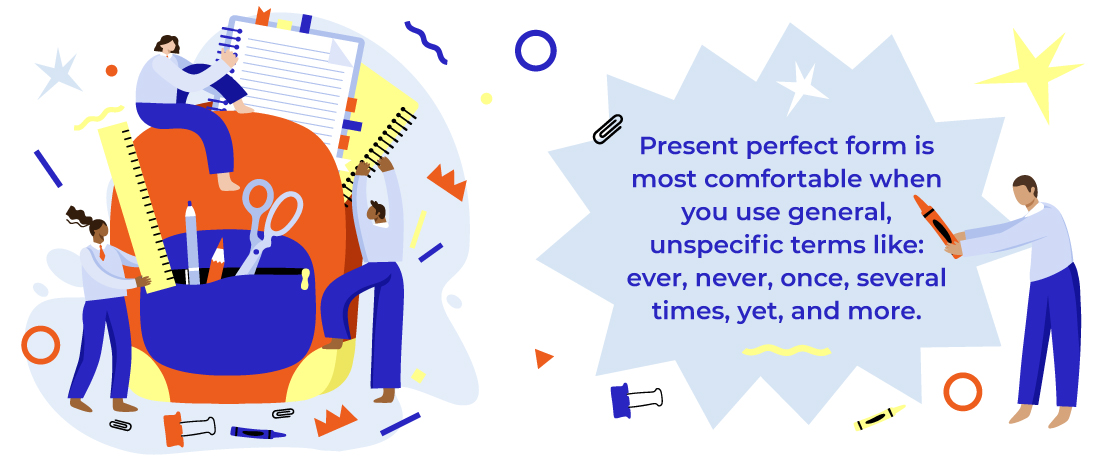
Present perfect form is most comfortable when you use general, unspecific terms like: ever, never, once, several times, yet, and more.
Here are the specific instances when you can use the present perfect form:
Present Perfect Tense When Discussing an Experience
You should use the present perfect tense when discussing the experience that you have on a specific topic. You can also use this tense when explaining that you don't have particular expertise.
- I have been to New York.
- I have been to Europe three times.
- I have never been to Asia.
- I think I have read that book before.
- I have never traveled by space ship.
- Christine has studied French.
- Have you two ever met?
When Discussing a Change Over Time
Use the present perfect tense to talk about changes that have occurred over time.
- Your baby has grown since I last saw her!
- I have become interested in Enneagram since learning about the specifics of it.
- My understanding of Spanish has increased since the last time I visited.
Present Perfect Tense When Talking About an Accomplishment
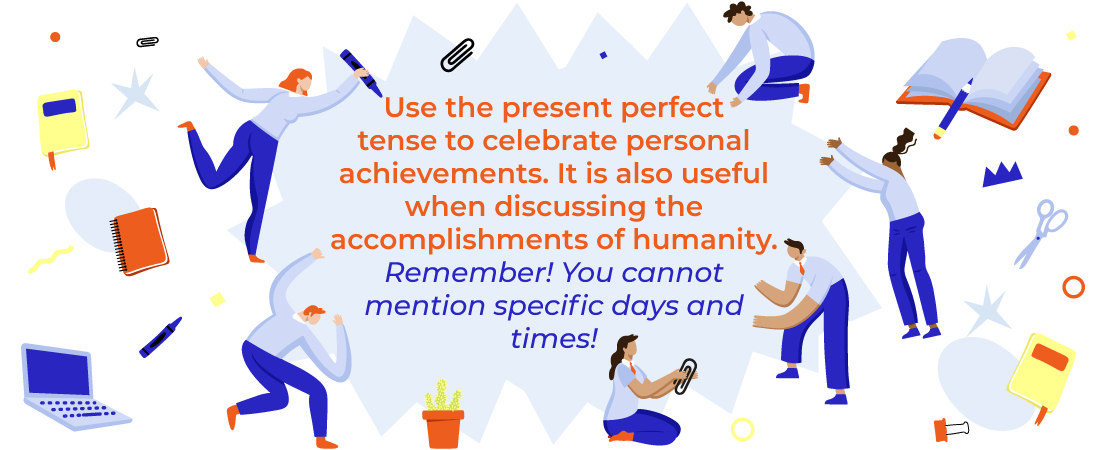
Use the present perfect tense to celebrate personal achievements. It is also useful when discussing the accomplishments of humanity. Remember! You cannot mention specific days and times!
- I have graduated from college!
- Scientists have discovered water on Mars.
- Our daughter has learned how to read.
- I have lost 30 pounds!
- She has completed a marathon (of watching Gilmore Girls on Netflix).
When Spotlighting an Event That Hasn't Happened
You can also use the present perfect tense when noting something that you had expected to happen, but it hasn't yet.
- The snow hasn't melted yet.
- Chris hasn't gone to the store.
- Julie hasn't learned that piece on the piano.
- I have still not learned how to bake the perfect chocolate chip cookie.
When Talking About Multiple Actions at Different Times
The final instance when you should use the present perfect tense is when you are talking about something that has happened multiple times and you expect it will happen again.
- I have had two papers due on this topic.
- We have had many disagreements about how to proceed on this subject.
- She has talked to several council members about the park rejuvenation project.
The present perfect tense is an indication to a reader that there is a chance that this past event might happen again.
One Final Reminder

The present perfect tense is an indicator in language that something has happened in the past. It also lets the reader know that this event might happen again.
When using the past perfect tense you must remember that you cannot use specific days, years, times, etc.
"When Am I Going to Use This!?"
Ah yes, the age-old question. There are so many little rules to the English language that it can feel silly to dedicate energy to learning all of them. But the reality is that effective writing is a life skill that will benefit students in the real world.
Whether it's the present perfect form or figuring out the correct type of there, understanding the correct way to write allows you to communicate your thoughts more clearly.
[subscribe=20543]
Of course, the benefits of knowing this helps on high-stakes exams like the SAT, but what about after college?
The fact is, writing is a skill that you will use when you are crafting an articulate rebuttal on Facebook, an email to a boss, or even a message on Tinder. For kids and adults alike, writing is something that should be understood and practiced.

ArgoPrep has created a variety of resources to help students of all ages master the basics and foundations of writing. These workbooks feature all of the language and usage rules that they should be learning in school. That way, they can effectively convey their thoughts and feelings through writing!
Present perfect tense has a particular use to talk about past events in general terms (how's that for confusing!?). For more information like this (and other English language topics), check out ArgoPrep's blog!