
“I hate math!” If your child struggles with mathematics, then you’ve probably heard this statement at least once.
As terrible as it might sound, hating math is a shared experience. According to research, 40% of Americans feel this way.
Many even meet the criteria of having a math phobia. Which leads us to the question, why do students hate math?
More importantly, what can we do about it?
The next few paragraphs provide the answers to both questions.
I Hate Math: The Cold, Hard Facts
When someone says “I hate math” or “I’m not good at math, what they usually mean, is “math is hard for me.”
Children are not born hating math. In fact, young kids naturally love sorting, counting, and working puzzles. It is when math gets difficult that children (and adults) begin to build an “I hate math” barrier. Struggling with math can cause students to:
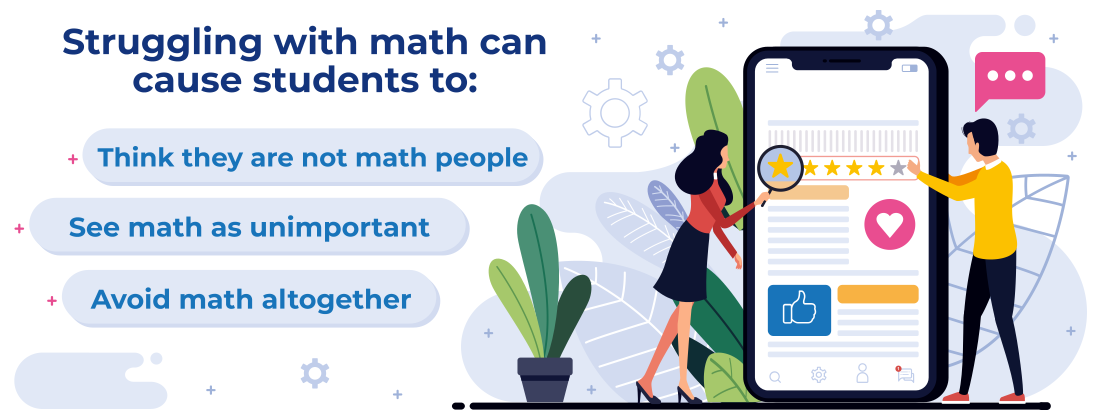
• Think they are not math people
• See math as unimportant
• Avoid math altogether
These negative feelings toward math can create a snowball effect, leading to gaps in understanding and an even more deep-seated dislike for numbers. It can also pass generationally!
Studies show that when parents enjoy math, their kids are more likely to love math. The same is true of the opposite. If a parent has an ‘I hate math’ attitude toward working with numbers, their children often take on the same outlook.

The ultimate learning platform that every parent needs in a K-8th grade household - to boost scores and confidence!
Monthly


Monthly
Everything is included. Anywhere!$12.99
/month$40.00
$12.99- 3 Days Money Back Guaranteed
- All Updates and Additions
This is often compounded by the fact that tough math concepts are being introduced at a much earlier age than they were in the past. A research study examining 141 textbooks published over 100 years (from 1900-2000), shows how much math instruction has changed over time.
In 1960, 85% of all math taught to K-12 was arithmetic focused. By 2000, this number had reduced to 64% with basic manipulation of numbers being replaced by more advanced math. Some see this as boosting the rigor while others view it as developmentally inappropriate.
Regardless, the magic to changing the ‘I hate math’ mentality in students who hate mathematics isn’t in the actual material but the way we teach it.
I Hate Math: Changing the Mindset
Practice math daily.
 Avoiding math leads to a loss of skills. This makes students hate mathematics more and more. Instead of wondering why do students hate math, focus on ways to fix the problem.
One way to change the “I hate math” mindset is to make it a part of the everyday routine.
This is true for both the classroom and at home. However, it doesn’t have to be complicated or stressful. Simply having kids solve a few math problems on paper or taking part in an interactive program online.
Connect math to everyday life and future careers.
If students do not see math as important, they are more likely to resist it and adopt an "I hate math" outlook. By connecting math and the real world, parents and teachers can help kids see a need for understanding how numbers work.
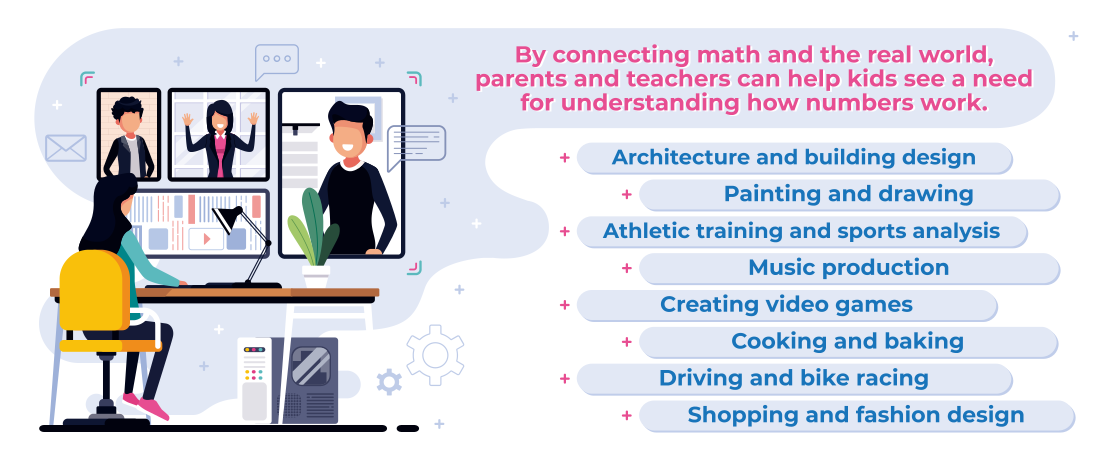
• Architecture and building design
• Painting and drawing
• Athletic training and sports analysis
• Music production
• Creating video games
• Cooking and baking
• Driving and bike racing
• Shopping and fashion design
When these connections are of interest to children, it makes the ties even stronger.
Keep the learning going in the summer.
By using the summertime to beef up math skills, students can go into the next school year ahead, not behind. This does not have to be expensive. It also does not have to involve your child leaving the house. The key is finding the best math materials that will keep students engaged and on track.
Incorporate science when you can.
Kids are often more open to science than they are to mathematics. Because of this, STEM activities and experiments can bridge the gap between science, technology, engineering, and math. One of the reasons that science interests children more than math is because it usually involves tactile (hands-on) learning.
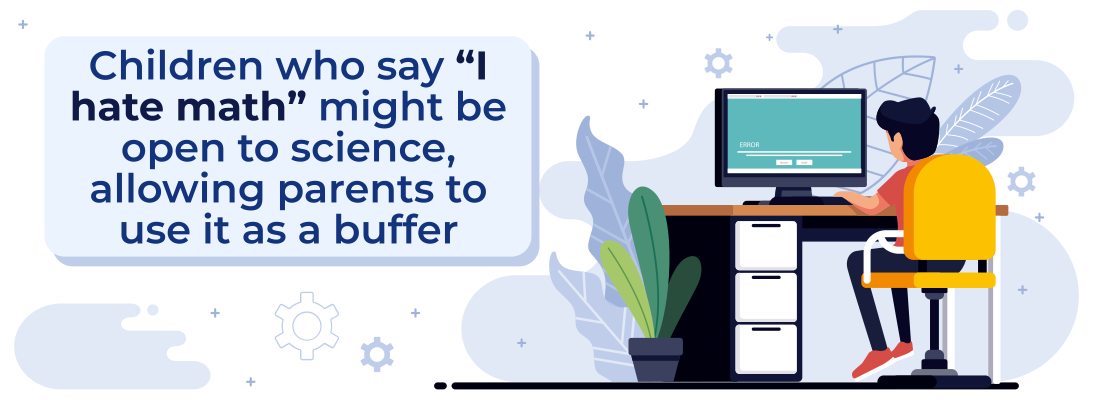
Children who say "I hate math" might be open to science, allowing parents to use it as a buffer.
Use technology and multi-sensory approaches.
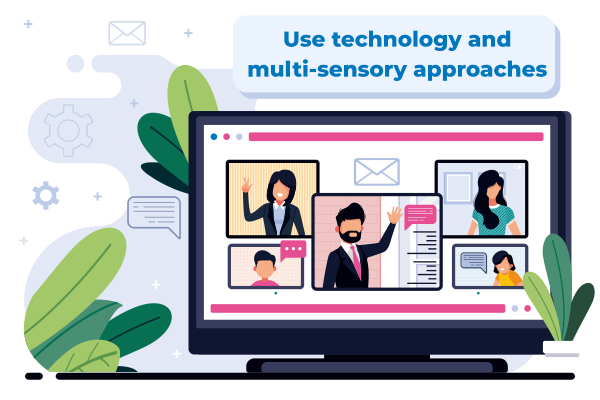 Every person has a different style of learning. Although some students are visual learners, others need auditory stimulation or indirect instruction.
Using a multi-sensory approach that involves taste, touch, sound, hearing, and seeing can deepen understanding of math concepts.
Technology is an integral part of this process with online math programs and mathematics-based EdTech changing the way we teach numeracy.
If you’re looking for ways to help your child love math and get rid of the “I hate math” mentality once and for all, consider ArgoPrep’s award-winning online program for grades K-8. Our practice quizzes, drills, and math-based games are designed to help students grow and excel.