Unlocking Children's Learning Styles
Have you ever noticed that how you like to learn and how your child likes to learn is different? Learning styles is the basic idea that everybody digests new information differently.
As a teacher, it's easy to fall into the trap of believing students understand everything that you teach.
This can happen when students are engaging with the class activities, and eventually, I can't help but think, "Hey! This is awesome! They're learning and loving it, and I must be doing something right".
But even when I had a handful of students who were loving what we were doing in class, I always knew I'd have one or two that it wouldn't appeal to.
Did this make me a bad teacher? Absolutely not!
[workbook=13584][workbook=12145][workbook=11874]...
Obviously, 100% satisfaction for all students is an impossible goal. Still, by creating activities that appealed to all
different types of learners, I was able to provide my students with an enriching education that engaged all students.
There are
seven different types of
learning styles.
You may even be aware of how you best learn (have you ever heard somebody talk about learning best when writing information down?). Understanding the different learning types allows us to find ways to retain and understand information best.
This
8-part blog series will dig deep into the different learning styles and how best to apply them to your child in the classroom and at home.
When you understand how your child best learns, you will no longer wonder how to engage your child best so that you can focus on helping them build their skills for success.
[subscribe=20543]
Learning Styles Overview
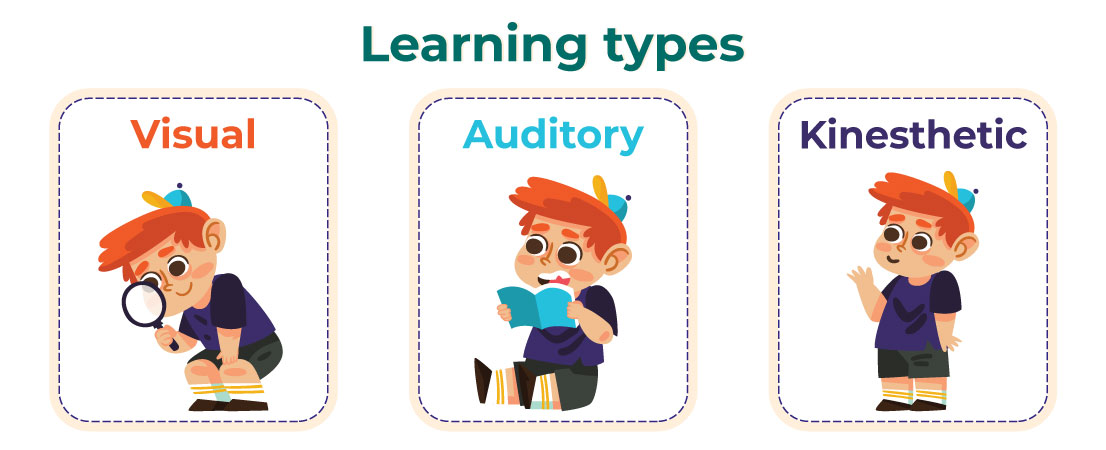
Below is a basic description of each learning style. As mentioned, over here at the ArgoPrep Blog, we'll be digging deeper into each of these styles to provide you with the best information to help your child.
There are also
numerous assessments online that you can take with your child to determine their learning style. Simply search, "
What learning style am I?" + the grade your child is in.
It is important to note that many assessments will only assess visual, auditory, and kinesthetic learning types; however, there are many more different types of learners beyond these three options.
If you choose to do an online assessment, make sure that you also consider the other unassessed learning types as well.
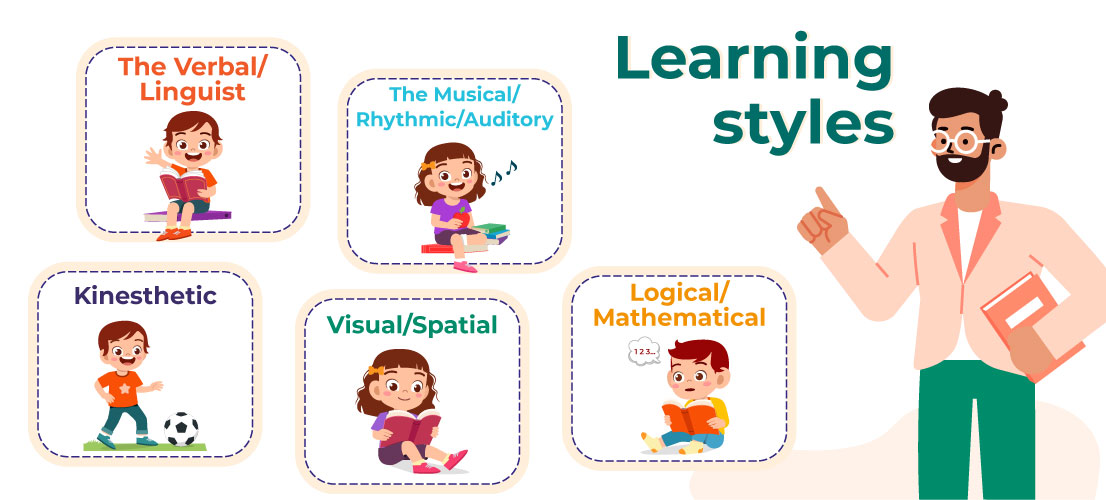
The Verbal/Linguist Learner
Learning occurs through the use of words (speech and writing). Verbal learners are commonly found enjoying a spoken lecture and giving presentations to show understanding.
The Musical/Rhythmic/Auditory Learner
Learning occurs through the use of music and sound. Do you remember "Please Excuse My Dear Aunt Sally?" (Order of operations pneumonic device) an auditory learner will use many of these devices to recall information.
Kinesthetic Learner
Learning occurs when the body is moving. This type of learner loves bouncing on yoga balls during lectures and may come up with silly dance moves to remember facts. Kinesthetic learners also love art and trade skills.
Visual/Spatial Learner
Learning occurs through the use of pictures and images. Using diagrams or photos will help a visual learner understand more clearly.
Logical/Mathematical Learner
Thought processes are more rational, and the use of reasoning and systems reinforce learning best. Logical learners expect predictable patterns and sequences. They will struggle with abstract ideas and concepts.
Inter- vs. Intra- Personal Learners
The following two types of learners can coexist with the above learning styles:
Interpersonal/Social Learner
You prefer to work in groups or with others.
Intrapersonal/Solitary Learner
You prefer to work alone and use independent study.
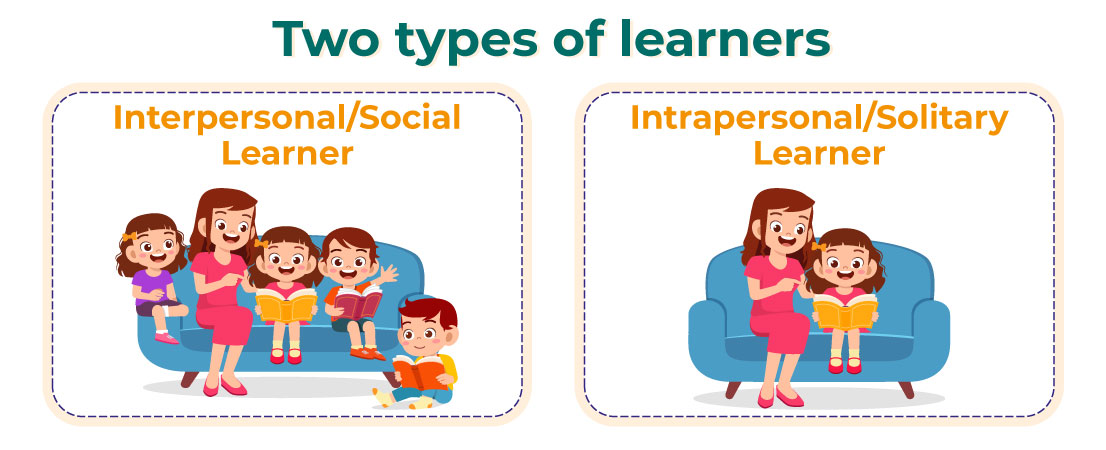
Your child has a preferred way of learning. They may thrive in social situations where they can bounce ideas off of their peers, whereas another student may find the chatter that accompanies group work to be a burden.
It is most apparent what type of learner you have based on if they enjoy background noise while working or not.
By paying close attention to your child's preferences while working, you will be able to create an
ideal environment for learning to occur.
The Impact of Understanding Learning Styles
Whether or not your child is struggling in school, the
value that understanding their learning style provides is immeasurable.
Think about a time you struggled to grasp a new concept.
For
instance, you may have been sent to training on a new computer program. In the training, the speaker moves through slides and covers the information quickly.
You had a piece of paper in front of you where you were supposed to take notes, but because of the newness of the concept and the speed of information being delivered, you left the training no closer to understanding the idea than when you entered.
After the training, you may have to ask a coworker to explain the new concept. There, they sit down with you, and they opened a computer program where they directed you through the steps to learn the idea.
Once you walk through each of the steps, you had a grasp on the new process and are ready to apply it.
In this specific instance, you would have demonstrated that working with your hands (or kinesthetic learning) was the best way for you to understand the information.
It may have taken you 3 or 4 days of training with a speaker to reach the same learning that a single session with your coworker working alongside you did.
Importance of Identifying Learning Styles in Students
Applying that same concept to your children's education, think about a concept that they are currently struggling to understand in school.
In my classroom, students often struggle with the fundamentals of writing a thesis. I would give them
lectures, examples, and practice time to write their thesis, but when it came time for them to write their own thesis, many of my students missed the "point."
Did this make me a bad teacher? Maybe in my early years, but as I refined my skills and resources, I was able to find different activities and projects to help reinforce the foundational skills for all learners.
Students are taught new concepts and information at a breakneck pace, and if they are receiving the information in a way that they don't learn best,
they could struggle and fail to learn the concepts. By directly identifying and encouraging learning styles, you will see your child excited and engaged with what they are learning in style.
Elementary vs. Secondary Learning Styles
It is also important to note the differences between the ages of students. If you have an elementary student, you may find that they have a preferred learning style, but it is still valuable to explore the different styles to find the one that best fits your child.
Early elementary students will find demonstrations, collaboration, and hands-on learning to be the most effective means of education.
When at home, look for opportunities to use these methods in explaining new concepts to see which your child prefers.
As your child grows and develops, their learning styles will become more apparent and distinct.
As they enter middle school and beyond, you will find that your child has a preferred method of note-taking, learning new concepts, and will excel in different types of projects.
ArgoPrep provides resources for all types of learners, making it an ideal resource for any student looking to refine and develop skills of concepts.
No matter how your child learns best, ArgoPrep's wide range of resources and support will have your child pushing themselves and thriving in some of the most challenging subjects!
Next Steps
For me, when I first learned about learning styles, I experienced a real "ah-ha!" moment as a future educator.
Once I earned my Masters in education and began working in the classroom, I was able to apply my knowledge of learning styles to my lessons for maximum effect for all students.
Of course, not every lesson, activity, or project appealed to all types of learners in my classroom. Being able to create a curriculum that excited all learners throughout the process allowed my students to find value in the content they were learning in my class.
As a parent,
I now see how learning styles affect my children.
While on a much smaller scale than my classroom, my children will grasp the content in different ways. My ability to appeal to their learning styles allows me to provide them with individualized and valuable educational support.
When assessing the reason why your child may be struggling in school, take into account their learning style and the primary method their teacher delivers new information--
you may quickly diagnose the problem.
This blog series will give you specific and useful information that you can use with your children immediately!