Multi-sensory learning and teaching focus on using as many senses and learning styles as possible to build a deeper understanding of a subject.
Traditionally used for reading, multi-sensory learning techniques have been especially helpful for
students with dyslexia.
But reading is not the only area where using all of the senses is helpful. Students struggling with math can use their vision, hearing, smell, touch (hands-on learning), and even taste, to create stronger connections to what they are learning. We as parents and teachers must only present them with the tools to do so.
Multi-Sensory Learning Defined:
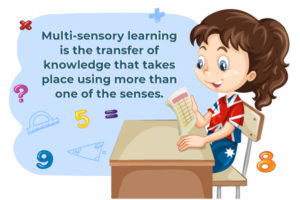
Multi-sensory learning is the transfer of knowledge that takes place using more than one of the senses.
For example, imagine that you are trying to teach your kindergartener how to recognize the number four. You’ve used flashcards and modeled how to write it yourself, but she still can’t remember what it is called.
At this point, you have used a visual approach. Your child, however, might not be a
visual learner. So, what could you do? Read the next section on how children really learn and see if it triggers any solution ideas.
How Do Children Learn?
Think back to your days in an elementary math class. How did your instructor teach you to add, multiply, or manipulate numbers?
Most likely, your instruction involved a chalkboard, pencil, and paper. You probably had a textbook assigned to you and spent a lot of time working problems from this book.
Worksheets and tests were on paper and making flashcards was about as exciting as math class became.
If you were a visual or
auditory learner, you probably did fine. Otherwise, mathematics was probably a struggle.
Today’s classrooms are much different. With the introduction of technology and advanced research, educators now understand that there at least 10 learning styles. You’ve probably heard of the first few.
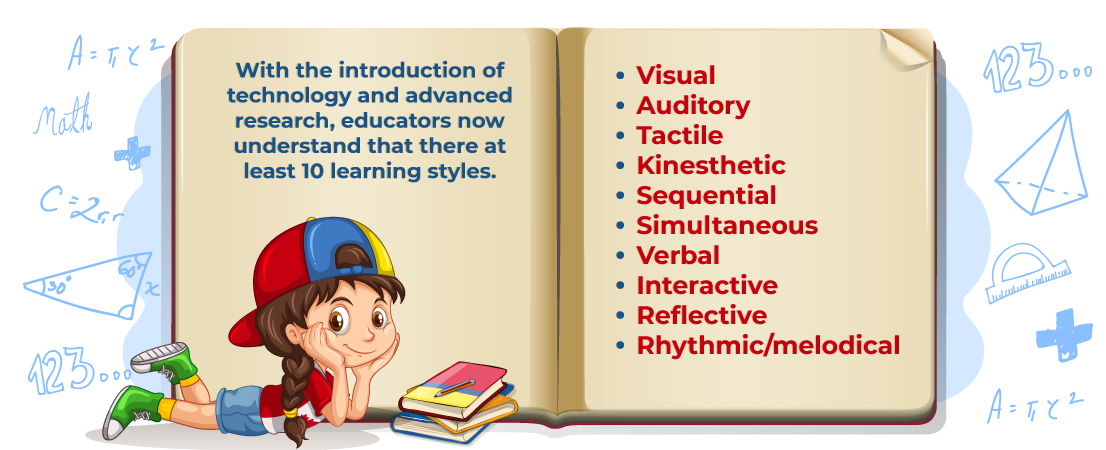
- Visual
- Auditory
- Tactile
- Kinesthetic
- Sequential
- Simultaneous
- Verbal
- Interactive
- Reflective
- Rhythmic/melodical
Multi-Sensory Learning: The Science Behind It
Multi-sensory learning experts recommend including as many applications of these learning styles in instruction, studying, and homework help as possible. By doing so, you greatly increase your child’s likelihood of understanding and remembering the material long term.
Without getting too ‘sciency’, all brain functions are
interconnected.
To really ‘learn’ something, we have to build
strong neuronal connections. If we only read about something or see it with our eyes, the connection will be a weak one. If a child’s parent tells them how something works but never gives him the opportunity to try himself, it will soon be forgotten.
One particular
study that proves this point focused on how children developed reading skills. Is it any surprise that at the end of the study, the children with the strongest skills were those who had the most interactivity in different parts of the brain?
In essence, involving as many different senses and learning styles in teaching makes better, stronger students.
[subscribe=20543]
Multi-sensory Learning: Techniques for Math
All of the info above brings us to this section: ways to help children understand math on a deeper level. As a teacher or a parent, you’re probably already providing auditory and visual materials (workbooks, lecture, flashcards, etc.)
Although those are important elements, if they were working, you wouldn’t be here. Below are some ways to reach the other 10 learning styles:
Tactile Tactile learners require hands-on learning opportunities to really ‘get it’. Simply showing a tactile learner the number 4 and expecting him to remember it would be frustrating for both parent and child. Instead, find ways to make math hands-on and physical.
For example, you could have some kindergartener use play-doh to make the number. Another tactile activity would be to have students trace out numbers or letters in salt or sand.
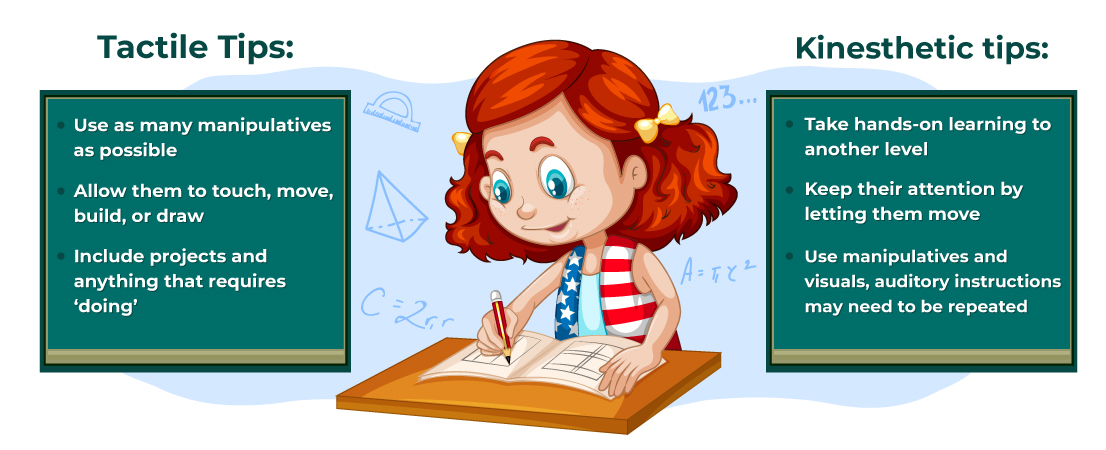
Tactile Tips:
- Use as many manipulatives as possible
- Allow them to touch, move, build, or draw
- Include projects and anything that requires ‘doing’
 Kinesthetic
 In a sense,
kinesthetic learners are similar to tactile as they need hands-on manipulation. However, kinesthetic-based learners like to get their entire bodies involved. They are your movers and shakers. They wouldn’t be interested in bending play-doh into number shapes, but instead would use their arms and legs!
Kinesthetic tips:
- Take hands-on learning to another level
- Keep their attention by letting them move
- Use manipulatives and visuals, auditory instructions may need to be repeated
Sequential Sequential learners need step by step instructions to understand the material. They like things to be organized. By providing math formulas and procedures that they can follow while doing classwork or homework, they will retain the information much better. If they enjoy hands-on learning, have them involved in making the list themselves.
Techniques Continued
Simultaneous and Interactive A simultaneous learner likes to jump right in! He or she won’t want to listen to a long lecture or have lots of discussions.

For these children, interactive options are often needed. Online programs like
ArgoPre’s K-8 program are a great solution for those who want to dig right in and do it themselves.
Interactive learners often need the same time of instruction, making it a win-win.
Verbal and Reflective These learning styles are what they sound like. For example, verbal learners like to talk it out and reflective learners like to write it out (afterward).
Part of multi-sensory learning is activating these parts of the brain as well. Most people think of math as something that must be done, not talked about, but that is not true.
Talk to your child about their solving process and allow them to do this thinking-out-loud, as well.
Allow your student or child to reflect on what he or she has learned after class.
Rhythmic/melodical Dance and music are at the heart of learning for these types of children. Look for music videos on the subject matter or have them come up with songs and dances themselves.
Thankfully, the internet is a treasure trove of resources to help with multi-sensory music-based learning options.
If you’re looking for a whole brain-based way to help your child improve in math, consider signing up for
ArgoPrep’s new K-8 math program. Our practice quizzes, drills, and math-based games are designed to help students grow and excel no matter what their learning style.