
TouchMath, also known as the Alphabet of Mathematics, is a visual approach to arithmetic. This trademarked program is for grades K-3 and is a multi-sensory approach that helps kids understand math better.
The program uses TouchPoints and a hands-on approach that works for visual, auditory, and tactile learners who need to ‘do’ to learn.
Teachers and parents around the country are using this concept to help kids better understand math ideas.
Although TouchMath isn’t one of our products, we think it goes hand-in-hand with Argo Prep’s new K-8 math program.
Whole brain learning calls for both tactile (touch) and tech-based, interactive activities. When you pair hands-on methods like TouchMath with our products, what you get is a stronger understanding of mathematics.
 TouchMath is a program described as ‘math for all senses.’
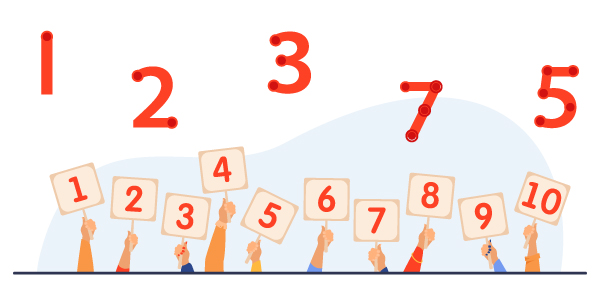
Students are taught to draw and use ‘TouchPoints” when counting. Each number, 1-9 has a certain amount of corresponding points that help children count without using their fingers.
As children learn to count the dots on each number, their brain begins to assign a value to each number as well. The number two shown below has two corresponding TouchPoints according to the TouchMath system.
The number 3 would have three, and so on.
[workbook=14031][workbook=12185][workbook=12187]...
Numbers 6-9 have what are known as double points. In other words, these numbers have TouchPoints that are counted twice. The system is designed this way for two reasons:
TouchMath is a program described as ‘math for all senses.’
Students are taught to draw and use ‘TouchPoints” when counting. Each number, 1-9 has a certain amount of corresponding points that help children count without using their fingers.
As children learn to count the dots on each number, their brain begins to assign a value to each number as well. The number two shown below has two corresponding TouchPoints according to the TouchMath system.
The number 3 would have three, and so on.
[workbook=14031][workbook=12185][workbook=12187]...
Numbers 6-9 have what are known as double points. In other words, these numbers have TouchPoints that are counted twice. The system is designed this way for two reasons:
 Another great thing is that the techniques are very structured, bringing concrete methods to a subject that can be very abstract to young minds. It also lends itself to Common Core standards, so there is no issue there.
Several studies have revealed evidence-based benefits of using this hands-on method. The results include the following findings:
Another great thing is that the techniques are very structured, bringing concrete methods to a subject that can be very abstract to young minds. It also lends itself to Common Core standards, so there is no issue there.
Several studies have revealed evidence-based benefits of using this hands-on method. The results include the following findings:
 TouchMath is for teachers and parents alike. Many schools are adopting the program as a part of their curriculum.
Teachers in schools without the program are choosing to bring it in as a supplemental tool.
It has proven especially beneficial when used to help struggling math students boost their ability to count, add, subtract, multiply, and divide.
Many parents are choosing to use TouchMath at home to help their children, even if the program isn’t being used in the classroom. This is successful since once learned; the TouchPoints can be used anywhere and on any assignment.
When partnered with ArgoPrep’s cutting edge online K-8 math program, children can see significant improvement in math skills, even when other techniques have failed.
Sign up for a free one month trial today and allow our interactive program to help pinpoint weaknesses and strengthen overall skills.
TouchMath is for teachers and parents alike. Many schools are adopting the program as a part of their curriculum.
Teachers in schools without the program are choosing to bring it in as a supplemental tool.
It has proven especially beneficial when used to help struggling math students boost their ability to count, add, subtract, multiply, and divide.
Many parents are choosing to use TouchMath at home to help their children, even if the program isn’t being used in the classroom. This is successful since once learned; the TouchPoints can be used anywhere and on any assignment.
When partnered with ArgoPrep’s cutting edge online K-8 math program, children can see significant improvement in math skills, even when other techniques have failed.
Sign up for a free one month trial today and allow our interactive program to help pinpoint weaknesses and strengthen overall skills.
What is TouchMath?
TouchMath is a program described as ‘math for all senses.’
Students are taught to draw and use ‘TouchPoints” when counting. Each number, 1-9 has a certain amount of corresponding points that help children count without using their fingers.
As children learn to count the dots on each number, their brain begins to assign a value to each number as well. The number two shown below has two corresponding TouchPoints according to the TouchMath system.
The number 3 would have three, and so on.
[workbook=14031][workbook=12185][workbook=12187]...
Numbers 6-9 have what are known as double points. In other words, these numbers have TouchPoints that are counted twice. The system is designed this way for two reasons:
- Counting a bunch of points would slow children down
- Skip counting is an important math skill for young learners
What are the Benefits of Using TouchPoints?
There are many great things about TouchMath that make this program worth considering. For one, it is visual. Around 65 percent of all students are primarily visual learners. It is also great for those who need to ‘touch’ their math. Around 5 percent of the population are tactile (hands-on) learners. Although this might seem like a small amount, without hands-on programs, these learners are often left behind and end up struggling with math their entire school experience.Another great thing is that the techniques are very structured, bringing concrete methods to a subject that can be very abstract to young minds. It also lends itself to Common Core standards, so there is no issue there.
Several studies have revealed evidence-based benefits of using this hands-on method. The results include the following findings:
- The TouchMath program increases computation skills
- Can result in 100% improvement of skills
- Critical thinking skills are improved by using TouchPoints
How Can it Be Used?
TouchMath is for teachers and parents alike. Many schools are adopting the program as a part of their curriculum.
Teachers in schools without the program are choosing to bring it in as a supplemental tool.
It has proven especially beneficial when used to help struggling math students boost their ability to count, add, subtract, multiply, and divide.
Many parents are choosing to use TouchMath at home to help their children, even if the program isn’t being used in the classroom. This is successful since once learned; the TouchPoints can be used anywhere and on any assignment.
When partnered with ArgoPrep’s cutting edge online K-8 math program, children can see significant improvement in math skills, even when other techniques have failed.
Sign up for a free one month trial today and allow our interactive program to help pinpoint weaknesses and strengthen overall skills.